
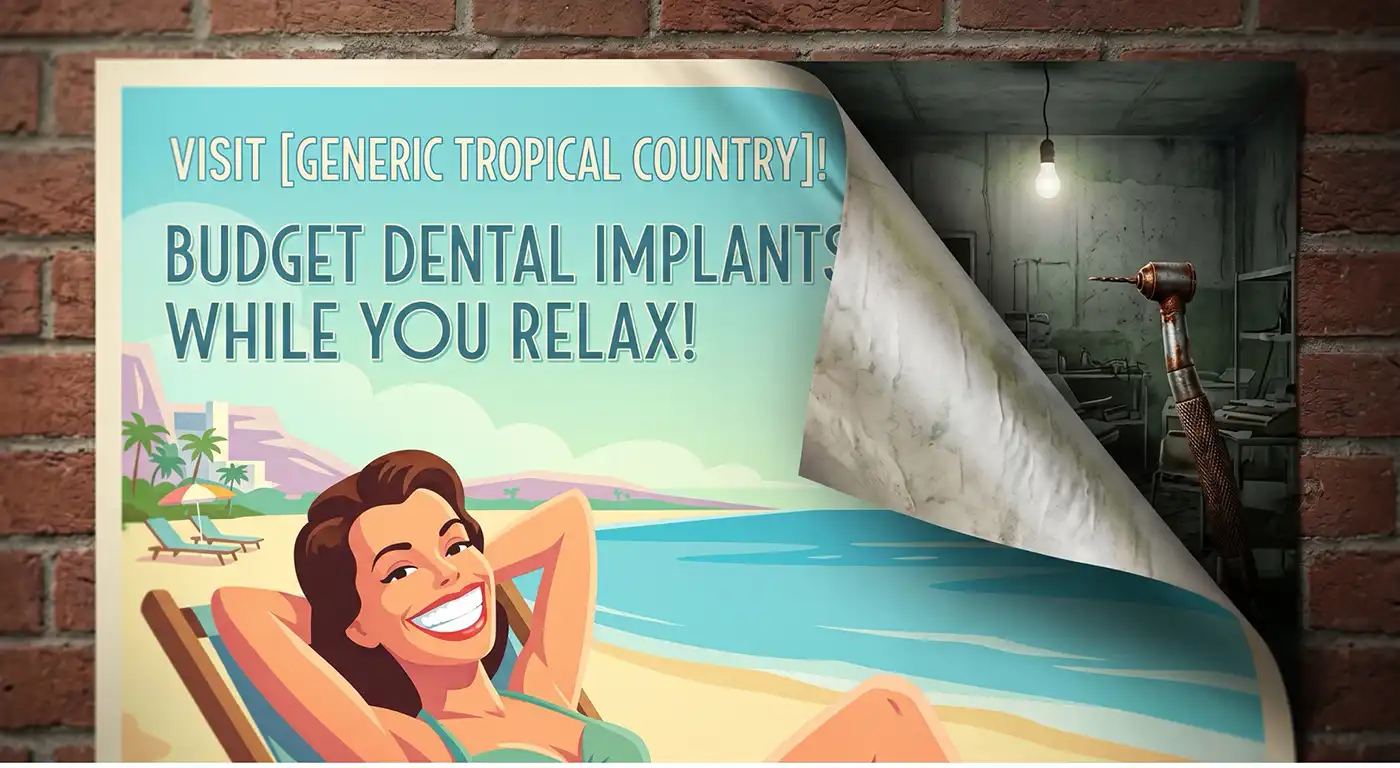
TL;DR: "Dental tourism"—traveling abroad to countries like Mexico or Costa Rica for cheap dental implants—is a growing trend, but it carries severe hidden risks. Substandard materials, a lack of rigorous infection control, and zero continuity of care can lead to painful, expensive implant failures. Investing in a local, Board-Certified Periodontist ensures safety, accountability, and a foundation built to last a lifetime.
As the cost-of-living rises, patients are naturally looking for ways to save money. Recently, a trend known as "dental tourism" has exploded in popularity. The pitch sounds incredibly tempting: Travel to a tropical destination, get a full set of dental implants for half the price, and enjoy a vacation while you recover.
While the upfront price tag of a "dental vacation" is enticing, the reality is often a painful and incredibly expensive nightmare.
Before you book a flight for bargain dental work, here is what you need to know about the hidden dangers of dental tourism and why doing it right the first time is your safest investment.
1. The "Bargain" Materials Problem
In the United States, dental implants are strictly regulated by the FDA. When you visit a specialist like Dr. Feldner, you receive high-grade, biocompatible titanium posts and state-of-the-art bone grafting materials designed for lifelong integration.
Many overseas clinics drastically cut their prices by using generic, "knock-off" implant brands or substandard materials. These cheaper implants have much higher rates of rejection, fracturing, and failure. If a generic implant breaks in your jaw, it often requires highly invasive, complex surgery to extract it.
2. The Speed Trap: Rushing Biology
Biology cannot be rushed. A successful dental implant process requires time for the bone to properly heal and fuse to the implant (osseointegration).
Dental tourism clinics cater to travelers who are only in the country for a week. To accommodate this, they often rush the process, placing the implant and loading it with a heavy artificial tooth on the exact same day in environments that may not support it. Rushing this process drastically increases the risk of peri-implantitis (a severe bone infection) and outright implant failure.
3. The Nightmare of No Follow-Up Care
This is the biggest danger of dental tourism. What happens if you get an infection three weeks after you return to Nebraska? What happens if the implant feels loose?
You cannot simply drive down the street for a quick adjustment. You have zero continuity of care, and your overseas doctor is thousands of miles away. Furthermore, many local U.S. dentists are hesitant to touch or try to fix failing overseas dental work because they do not know what generic materials were used or what surgical protocols were followed.
The Value of Doing It Right the First Time
Replacing a tooth isn't like buying a cheap pair of sunglasses; you are permanently altering the foundation of your skull and your systemic health.
As a Board-Certified Diplomate of the American Board of Periodontology, Dr. Barry Feldner offers something no overseas clinic can: absolute accountability, elite surgical expertise, and a commitment to your lifelong health.
Read our Dental Implant Buyer's Guide to see how we build your foundation right the first time.
Invest in a smile that lasts a lifetime. > Don't gamble your health on a "dental vacation." Trust your foundation to Central Nebraska's recognized expert. Call Dr. Feldner's Kearney office today at (308) 237-0100 or click here to schedule your secure implant consultation.
What are the risks of dental tourism for implants?
- The primary risks of dental tourism include the use of unverified or generic implant materials, lack of strict U.S. infection control standards, rushed surgical timelines that ignore biological healing, and a complete lack of follow-up care if complications or infections arise once you return home.
Will a local dentist fix my implants if they were done in another country?
- Many local dentists and periodontists are very hesitant to repair failing implants placed overseas. This is because it is often impossible to identify the generic brand of the implant, making it incredibly difficult to find the correct specialized tools or replacement parts needed to fix it.
Why should I choose a local Board-Certified Periodontist over a cheaper overseas clinic?
- Choosing a local Board-Certified Periodontist guarantees that your procedure is performed by an expert who has passed the highest level of rigorous testing in the U.S. Verify the importance of Board Certification at the American Board of Periodontology. It ensures FDA-approved materials, a biologically sound timeline, and immediate access to care if you have questions during your recovery.